
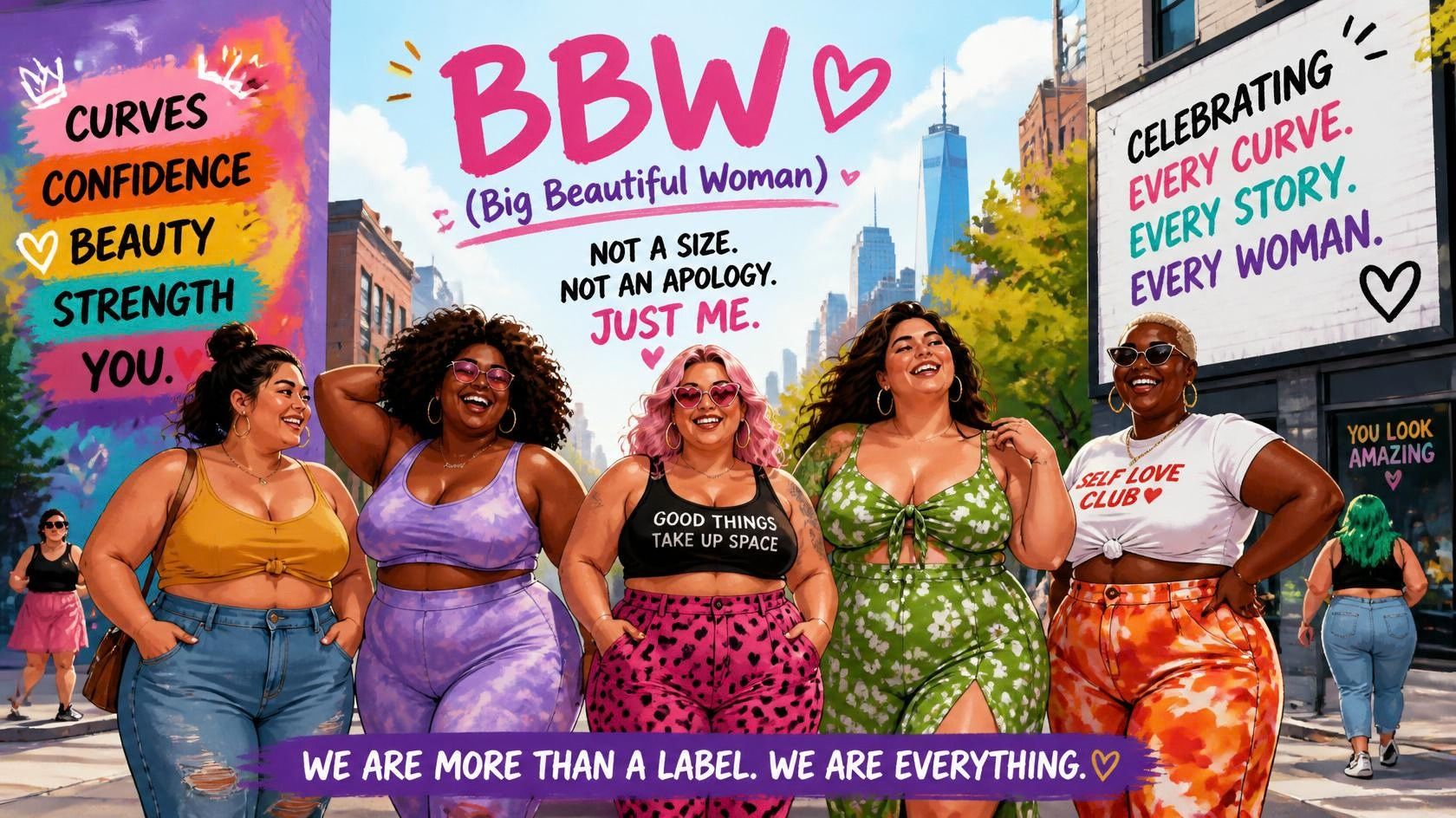

Have you ever seen BBW in a text message, dating profile, or social media comment and wondered what it means? You’re not alone. This abbreviation can confuse people who encounter it for the first time.
The most common bbw meaning is Big Beautiful Woman. People use it to describe a woman with a larger body size who is considered beautiful or attractive. Depending on the situation, the term can express appreciation, describe a body type, or indicate attraction.
However, BBW doesn’t mean exactly the same thing in every conversation. Some women embrace the label as part of their identity. Others prefer terms such as curvy or plus-size.
This guide explains the meaning of BBW, its background, and its use across texting, dating platforms, fashion communities, and social media. You’ll also learn how to respond respectfully when someone uses it.
BBW Meaning – Quick Meaning
BBW stands for Big Beautiful Woman. It’s a common abbreviation used online to describe a woman with a larger body size. The phrase combines a physical description with an expression of beauty.
You’ll often see BBW in dating profiles, social media hashtags, fashion content, and online communities. Its tone depends on the person using it and the surrounding conversation.
For example, a fashion creator might use BBW to celebrate body confidence. Someone on a dating app might use it to describe their attraction to larger women.
The term isn’t automatically an insult. However, not everyone likes being described this way. Personal preference matters.
Quick takeaway: BBW usually means Big Beautiful Woman, but context determines whether the term sounds friendly, affirming, romantic, or inappropriate.
Quick Definition
The quick definition of BBW is Big Beautiful Woman. Each letter represents one word in the phrase.
- B: Big
- B: Beautiful
- W: Woman
People commonly use this abbreviation for women with larger bodies, especially when discussing beauty, fashion, dating, or attraction.
For instance, a woman might describe herself as BBW in a dating profile. A clothing brand might use the term when promoting fashion for fuller body types.
The phrase often carries a positive tone because it connects body size with beauty. Still, that doesn’t mean everyone appreciates the label.
Consider this example:
Person A: What does BBW mean in her profile?
Person B: It stands for Big Beautiful Woman. She may be describing her body type or expressing a personal preference.
Understanding the context helps you interpret the message correctly.
Simple Examples
You can understand the bbw meaning more easily by seeing how people use it in everyday situations. The abbreviation may appear in a conversation about clothing, dating, confidence, or online content.
Here are a few simple examples:
- Fashion: “This brand has a new BBW fashion collection.”
- Social media: “I love seeing BBW creators sharing their personal style.”
- Dating: “He’s interested in dating BBW women.”
- Self-description: “She proudly identifies as a BBW.”
- Content creation: “That BBW influencer shares fashion tips and lifestyle content.”
Here’s a short conversation:
Alex: I saw BBW in a fashion hashtag. What does it mean?
Jamie: It means Big Beautiful Woman. People often use it when discussing larger women and beauty.
Alex: So it’s always a compliment?
Jamie: Not necessarily. The situation and the person’s preferences matter.
These examples show why context matters more than the abbreviation alone.
Origin & Background
The phrase Big Beautiful Woman became more widely recognized during the late twentieth century, as communities and publications increasingly challenged narrow beauty standards. Many women wanted broader representation in fashion, entertainment, and everyday culture.
Mainstream media had often promoted a limited range of body types. In response, body positivity communities helped create spaces where women could celebrate beauty in different forms.
BBW also became familiar in dating communities and online forums. As internet use grew, people began using the abbreviation in profiles, discussions, and search terms.
However, it’s important to distinguish the phrase’s broader cultural background from its exact origin. Without reliable historical evidence, assigning a single inventor or precise starting date would be misleading.
Today, BBW can communicate body confidence, attraction, self-expression, or a simple body-type description. Its meaning depends on the setting and the person using it.
Real-Life Conversations
Real-life conversations make the bbw meaning easier to understand. People don’t always explain abbreviations directly. Instead, they use them while discussing fashion, relationships, social media, or personal preferences.
You might see BBW in a private message, a public comment, or a dating profile. Each situation can give the abbreviation a slightly different tone.
For example, a friend might mention a BBW model while discussing clothing. Someone else might use the term to describe the kind of person they’re attracted to.
Here are four examples from familiar online settings. They show how BBW can appear naturally without turning every conversation into a discussion about body size.
Remember that these are illustrative conversations. Real people may use different language depending on their relationships, intentions, and comfort levels.
WhatsApp Conversation
On WhatsApp, BBW may appear in a private chat between friends who are discussing fashion, social media creators, or dating. The abbreviation doesn’t have a special WhatsApp-specific meaning. It generally retains its usual definition.
Example conversation:
Mia: Did you see that new fashion page I shared?
Sara: Yes! She posts great outfits for BBW fashion.
Mia: I love how she styles different looks.
Sara: Same. Her content makes shopping feel more approachable.
This conversation uses BBW in a fashion context. It focuses on clothing and personal style rather than judging someone’s appearance.
You might also encounter the term when asking a friend about a dating profile. If you’re unsure what someone means, ask politely instead of making assumptions.
Private chats can feel casual, but respectful language still matters. A friendly tone doesn’t automatically make every comment appropriate.
Instagram DM
Instagram DMs often include abbreviations related to fashion, dating, lifestyle content, and personal identity. Someone might use BBW when discussing a creator, a clothing collection, or a body-positive post.
Example conversation:
Taylor: I love your outfit! Where did you find it?
Jordan: Thank you! I found it through a BBW fashion creator.
Taylor: I’ll check out her page. Her styling looks great.
Jordan: You should. She shares affordable outfit ideas, too.
Here, BBW describes the creator’s niche rather than serving as an insult. The conversation stays focused on fashion and useful recommendations.
On Instagram, the abbreviation may also appear in hashtags, captions, comments, and dating-related messages. Its tone can change when someone uses it to express sexual attraction rather than discuss clothing.
Before applying the label to another person, consider whether it’s relevant and welcome. When in doubt, describe the content or outfit instead of making someone’s body the focus.
Text Message
In ordinary text messages, BBW usually stands for Big Beautiful Woman. Someone might ask about the abbreviation after seeing it in a dating bio, online discussion, or message from a friend.
Example conversation:
Chris: What does BBW mean? I saw it in someone’s profile.
Morgan: It stands for Big Beautiful Woman.
Chris: Is that another way to say plus-size?
Morgan: They’re related, but they aren’t exactly the same. BBW can also suggest beauty or attraction.
This example highlights an important distinction. Plus-size generally describes a clothing or body-size category, while BBW combines a reference to body size with an affirming description.
Still, people don’t always use these terms in precisely the same way. Some use BBW as a self-description, while others encounter it in dating or adult-oriented contexts.
If someone uses the abbreviation in a message and you don’t understand their intention, ask what they mean. A simple question can prevent an awkward misunderstanding.
TikTok Comments
On TikTok, BBW may appear in comments about fashion videos, body confidence, lifestyle creators, and dating-related content. It can also appear in hashtags that help users find posts within a particular community.
Example comment thread:
Commenter 1: Her outfit looks amazing!
Commenter 2: I love seeing more BBW fashion creators.
Commenter 3: Great styling, and those colors work beautifully together.
In this example, the comments celebrate clothing and creative expression. The abbreviation helps identify a particular fashion niche.
However, TikTok comments don’t always use BBW positively. Some users may use the term to express attraction or make remarks about someone’s body. Others may dislike receiving that label from strangers.
When commenting on a creator’s video, focus on what the person shares rather than making unsolicited remarks about their body. Compliments about an outfit, talent, or styling usually feel more thoughtful and specific.
Emotional & Psychological Meaning
The meaning of BBW can extend beyond physical appearance. In some communities, the term connects with self-acceptance, body confidence, and the belief that beauty doesn’t belong to one body type.
For women who embrace the label, BBW may express pride in their appearance or personal identity. It can also help them find communities where people share similar experiences.
However, the term doesn’t automatically carry a deep emotional meaning for everyone. Some people use it as a straightforward description. Others encounter it primarily in dating or adult-oriented spaces.
Context makes the difference.
It’s also worth remembering that body positivity means more than calling someone beautiful. It includes respecting people’s choices, avoiding unwanted comments, and recognizing that nobody needs to meet a particular beauty standard to deserve respect.
Self-Acceptance
Self-acceptance means feeling comfortable with yourself without constantly comparing your appearance with unrealistic expectations. For some women, identifying as BBW supports that mindset.
The label can offer a way to describe their bodies without treating a larger size as something shameful. It may also help them connect with body positivity discussions and online communities that celebrate different shapes.
For example, a woman might write, “I’m proud to be a BBW,” in a personal post. She’s using the term as a positive self-description.
However, self-acceptance looks different for everyone. One woman may enjoy the label, while another may prefer plus-size, curvy, or no body-type label at all.
The important point is choice. You don’t have to adopt a particular term to feel confident in your own skin. Respect how other people describe themselves, too.
Confidence
Confidence is another idea that people sometimes associate with BBW. A woman who embraces the label may use it to express comfort with her body, fashion choices, or identity.
For example, a BBW influencer might share outfit ideas while encouraging followers to wear clothes they enjoy. Her message may focus on personal style rather than changing her body to meet traditional beauty expectations.
Confidence doesn’t mean someone feels positive about their appearance every day. People can experience insecurity while still respecting themselves and making choices that feel right.
A thoughtful compliment should recognize something specific instead of assuming how a person feels.
Example:
Friend: That outfit looks fantastic on you.
Friend: Thank you! I feel great wearing it.
This exchange centers on personal style and comfort. That’s often more meaningful than reducing someone’s appearance to a single label.
Inclusivity
Inclusivity means making room for people with different backgrounds, experiences, and body types. In discussions about BBW, it often refers to broader representation in fashion, media, and online communities.
For years, some advertising and entertainment industries favored a narrow range of body shapes. Greater visibility for larger women can help challenge the idea that only one appearance deserves attention.
BBW fashion pages, inclusive clothing collections, and body-positive creators can help expand that representation. They may also provide practical advice about fit, styling, and shopping.
Still, inclusivity requires more than using a label. Brands should consider a range of sizes, accessible designs, and respectful messaging.
People also need freedom to choose their own descriptions. A genuinely inclusive space doesn’t assume that every larger woman identifies as BBW or wants her body discussed publicly.
Representation
Representation means seeing people with different bodies and experiences reflected in media, advertising, fashion, and everyday culture. For some audiences, BBW creators help fill a gap in traditional beauty coverage.
A BBW model might appear in a clothing campaign. A plus-size creator might demonstrate how a particular outfit fits. A fashion editor might discuss how brands serve customers across a broader range of sizes.
These examples make representation practical. Readers can discover clothing ideas, styling techniques, and perspectives that mainstream content may overlook.
However, representation works best when it avoids stereotypes. Larger women shouldn’t appear only in stories about weight, dieting, or body confidence. They can also be portrayed as professionals, artists, athletes, parents, and everyday people.
The goal isn’t to replace one narrow beauty standard with another. It’s to make room for more experiences and identities.
Usage in Different Contexts
The bbw meaning can shift depending on where you encounter it. In fashion content, the term may describe a style niche or target audience. In dating profiles, it may communicate body type or attraction.
On social media, BBW can appear in hashtags and creator descriptions. In private messages, the abbreviation may be part of a casual conversation. Adult-oriented websites may use it as a category for content featuring larger women.
These uses aren’t interchangeable. A term that makes sense in a dating profile may feel out of place in a workplace conversation.
Before using BBW, consider three questions:
- Is body type relevant to the conversation?
- Does the person use or accept this label?
- Could a more specific term communicate the point better?
A little context helps you avoid awkwardness and communicate respectfully.
Social Media
Social media platforms such as Instagram, TikTok, and Facebook allow people to share fashion ideas, lifestyle content, and body positivity discussions. BBW may appear in captions, hashtags, creator bios, and comments.
For example, a creator might use BBW fashion hashtags to help interested viewers discover outfit inspiration. A clothing brand might feature larger models to show how its products fit different body shapes.
The term can also appear in attraction-focused posts or adult-oriented content. That means you shouldn’t assume every BBW hashtag represents the same kind of material.
If you’re searching for fashion inspiration, look at the post’s actual content and the creator’s purpose. If you’re commenting on someone’s photo, focus on what they’ve chosen to share.
Social media makes niche communities easier to find. It doesn’t remove the need for context, consent, or respectful language.
Friends & Relationships
Among friends and partners, BBW may come up during conversations about attraction, dating preferences, fashion, or personal identity. Some people use it comfortably, especially when describing themselves.
For example:
Avery: My friend describes herself as BBW. Is that okay to say?
Riley: If that’s the term she uses for herself, it’s generally fine to follow her preference.
Avery: What if I don’t know whether she likes it?
Riley: Use her name or ask politely if the label is relevant.
In relationships, the tone and intention behind a comment matter. A term that feels affectionate between partners may sound intrusive coming from someone unfamiliar.
You also don’t need to label someone’s body to compliment them. Saying “I love your style” or “You look great” can communicate appreciation without making assumptions about how they identify.
Respectful communication begins with listening.
Dating Platforms
Dating platforms are one place where BBW frequently appears. People may use it in their profiles, search filters, personal descriptions, or statements about attraction.
A woman might identify herself as BBW because she feels comfortable with the term. Someone else might use it to describe the body type they’re attracted to.
The abbreviation can also appear in adult-oriented dating communities. Its presence doesn’t tell you everything about a person’s intentions, relationship goals, or personality.
Example profile: “I enjoy live music, weekend hikes, and meeting people who appreciate honest conversation.”
If someone includes BBW in their profile, read the rest of the description before drawing conclusions. Pay attention to the person’s interests, boundaries, and stated expectations.
When sending a message, avoid treating a body-type label as permission to make sexual remarks. Start with a respectful greeting and a genuine point of connection.
Work or Professional Settings
In professional settings, BBW is appropriate only when the term directly relates to the subject. A fashion editor might use it when discussing a particular market segment or reviewing terminology used in an industry.
A clothing designer could also encounter the abbreviation while researching customer preferences. In these situations, the term serves a clear purpose.
Workplace small talk is different. Describing a coworker as BBW when discussing an unrelated project can feel awkward or intrusive.
Consider these examples:
- Relevant: “The campaign explores how BBW fashion brands represent different body types.”
- Unnecessary: “Our new colleague is a BBW.”
The first sentence discusses a topic where the terminology may matter. The second focuses on a person’s body without explaining why it’s relevant.
When writing professionally, consider whether plus-size, extended sizing, or a more precise description would communicate the idea more clearly.
Casual vs Serious Tone
BBW can carry a casual, affirming, romantic, or sexual tone. The difference depends on the relationship between the speakers and the surrounding conversation.
A fashion creator may use the abbreviation in a relaxed caption. Someone writing a research paper might discuss it as a term found in online communities. On a dating platform, it may communicate attraction or describe a preferred body type.
The same wording can feel different in each setting.
| Context | Possible tone | What to consider |
| Fashion post | Casual or affirming | Focus on style and representation |
| Dating profile | Personal or attraction-focused | Respect preferences and boundaries |
| Academic discussion | Analytical | Define the term clearly |
| Workplace small talk | Potentially intrusive | Use it only when relevant |
| Private relationship | Depends on the people involved | Follow mutual preferences |
Don’t judge the tone from the abbreviation alone. Look at the complete message and the people involved.
Common Misunderstandings
People sometimes misunderstand BBW because they assume it has one fixed meaning in every situation. Although Big Beautiful Woman is the common expansion, its tone and purpose can change.
Some users encounter the term in body-positive fashion communities. Others first see it on dating apps or adult-oriented websites. These experiences can shape how they interpret it.
Another common misunderstanding involves personal preference. A woman may embrace BBW as a positive identity, while someone else may find it uncomfortable.
Neither reaction should automatically be dismissed.
To interpret the abbreviation accurately, consider where it appears, why the speaker uses it, and how the person being described feels about the label. These details matter more than broad assumptions.
Assuming It’s Always Offensive
Some people believe BBW is always offensive because it refers to body size. However, that assumption overlooks the way many women use the phrase as a positive self-description.
For example, a creator might describe herself as a BBW while sharing fashion advice. She may see the label as an expression of confidence or identity.
That doesn’t mean everyone welcomes it. A person can dislike a term even when other people use it proudly.
Example conversation:
Sam: Isn’t BBW an insult?
Taylor: Not necessarily. Some women use it positively, but personal preference matters.
Sam: So I shouldn’t assume everyone likes it?
Taylor: Exactly.
The best approach is to avoid treating the term as automatically offensive or automatically complimentary. Consider the context and follow the individual’s preference.
Thinking It Refers to Any Plus-Size Person
BBW and plus-size are related terms, but they aren’t identical. Plus-size often describes a clothing-size category or a general body-size range. BBW combines a reference to a larger body with the words “Big Beautiful Woman.”
Some plus-size women identify as BBW. Others prefer different language or don’t use body-type labels at all.
For example, a clothing brand might describe a collection as plus-size because of its available sizing. A dating profile might use BBW to communicate a personal description or attraction.
These uses serve different purposes.
Avoid assuming that a person’s clothing size determines their identity. Body shape, height, proportions, and personal preference can all influence how someone describes themselves.
When you need a neutral description, use the term that fits the actual subject. When describing an individual, respect the language they choose for themselves.
Using It Without Context
Using BBW without context can lead to confusion or discomfort. The abbreviation may be suitable in a discussion about fashion, dating terminology, or online culture. In an unrelated conversation, it may sound like an unnecessary comment about someone’s body.
Imagine a coworker presenting a marketing report. Calling that person BBW doesn’t help explain the report or their contribution. It shifts attention toward appearance.
By contrast, a writer discussing how BBW fashion brands market clothing has a clear reason to mention the term.
Before using the abbreviation, ask yourself whether it adds useful information. If it doesn’t, leave it out.
You can also choose more specific language. Discuss someone’s outfit, creative work, or professional achievements instead of making their body the focus.
Good communication isn’t about avoiding every descriptive word. It’s about using the right words for the situation.
Assuming Everyone Likes the Label
Not everyone likes being called BBW. Some women embrace the term, while others prefer plus-size, curvy, full-figured, or simply their name.
Personal preference can reflect culture, individual experience, the speaker’s tone, or the context in which the term appears. One person may find it affirming in a dating profile but dislike hearing it from a stranger.
Consider this example:
Jordan: Is it okay if I describe you as BBW?
Casey: I’d rather you use plus-size.
Jordan: No problem. Thanks for telling me.
This exchange shows how easily a potential misunderstanding can be avoided.
Don’t argue with someone about the label they prefer. You don’t need to share their preference to respect it.
When in doubt, use neutral language until you know what the person finds comfortable.
Using It Professionally Without Reason
In professional writing, BBW should appear only when it serves a clear purpose. A fashion editor might discuss the term when examining online trends or industry terminology. A researcher might explain how communities use the abbreviation.
However, mentioning a colleague’s body type in an unrelated report or workplace conversation usually adds nothing useful.
Compare these examples:
- Purposeful: “The article examines how BBW fashion creators influence online style discussions.”
- Unnecessary: “The BBW employee handled the presentation.”
The first connects the term to the subject. The second introduces an irrelevant personal description.
Professional writing benefits from precision. Use plus-size clothing, extended sizing, or a specific category when those terms better match the topic.
If you’re writing about an individual, focus on their work and relevant qualifications. Appearance should not replace meaningful information.
Comparison Table
BBW shares some similarities with terms such as curvy, plus-size, and full-figured. However, each expression has its own emphasis and may carry a different tone.
| Term | General meaning | Typical tone |
| BBW | Big Beautiful Woman; combines body size with an expression of beauty | Positive, personal, or attraction-focused |
| Curvy | Describes a body shape with noticeable curves | Often positive or neutral |
| Plus-size | A sizing category or general body-size description | Usually neutral |
| Full-figured | Describes a fuller body type | Often positive or descriptive |
| Slim | Describes a relatively slender body frame | Neutral or positive |
| Petite | Often describes a smaller frame or shorter stature in fashion | Neutral |
| Athletic | Describes a sporty or muscular build | Neutral or positive |
| Thick | Informal slang for a fuller, curvier body | Casual and context-dependent |
| Voluptuous | Emphasizes pronounced curves | Often sensual or complimentary |
These meanings are general rather than strict rules. People may use the terms differently depending on culture and context.
Key Insight
The biggest difference is that BBW combines a description of body size with an explicit appreciation of beauty. Plus-size, by comparison, often functions as a sizing category or neutral description.
Curvy focuses more on body shape than overall size. Full-figured is another descriptive expression, while thick is informal slang. Voluptuous often emphasizes pronounced curves and may sound more sensual.
None of these terms provides a complete picture of someone’s appearance, personality, or identity.
For example, a woman may wear plus-size clothing and describe herself as curvy. She may also reject all these labels.
The best term depends on the purpose of the conversation. If you’re discussing clothing availability, sizing language may be most useful. If someone describes herself as BBW, you can respect that choice without assuming everyone shares it.
Variations and Related Terms
Several related expressions appear alongside BBW in fashion, dating, and social media discussions. Some describe body size or shape. Others refer to clothing categories, online creators, or broader ideas about acceptance.
Knowing the differences helps you understand captions, hashtags, dating profiles, and online conversations.
For example, a plus-size creator might share styling advice without identifying as BBW. A fashion brand might promote clothing collections for a range of sizes. A body-positive account might focus on self-acceptance rather than any particular body type.
These terms overlap, but they aren’t interchangeable in every situation.
The following sections explain ten related expressions and show how each one differs from BBW. Use them as general language guides rather than rigid definitions.
1. Plus-Size
Plus-size generally refers to clothing sizes or body sizes outside a retailer’s standard size range. The exact sizing category varies between brands, countries, and clothing types.
In fashion, the term helps customers find relevant products. It may appear in clothing collections, shopping filters, modeling categories, and style guides.
For example, a brand might advertise plus-size dresses or offer extended sizing across several product lines.
Plus-size is often more neutral than BBW because it doesn’t explicitly include the word beautiful or imply attraction. However, the best description still depends on context and personal preference.
A plus-size woman might identify as BBW, curvy, or something else entirely. You shouldn’t assume that one term automatically applies to everyone who wears a particular size.
When discussing clothing, plus-size is often a useful practical term. When describing an individual, follow their preferred language.
2. Curvy
Curvy describes a body shape with noticeable curves. People often use it when discussing proportions around the hips, waist, or bust.
Unlike BBW, the word doesn’t directly refer to a larger body size. Someone can describe herself as curvy without identifying as plus-size.
For example, a fashion creator might post a guide to choosing jeans for curvy body shapes. The focus is on fit and styling rather than a specific clothing-size category.
Curvy can sound positive, neutral, or personal depending on the conversation. Some people enjoy the term, while others prefer more specific descriptions.
The key difference is emphasis. Curvy focuses on body shape, whereas BBW combines a larger-body description with an expression of beauty.
If you’re unsure which word someone prefers, avoid guessing. Use their chosen term or focus on the clothing or style you’re discussing.
3. Full-Figured
Full-figured is a descriptive term for a woman with a fuller body shape. It sometimes appears in fashion writing, modeling descriptions, and discussions about clothing fit.
The expression can sound positive or neutral, depending on the speaker and setting. Some people prefer it because they find it less informal than BBW.
For example, a fashion editor might describe a collection designed for full-figured customers. In that context, the phrase identifies the intended audience without suggesting anything about personal attraction.
However, full-figured isn’t a universal preference. Some people consider it old-fashioned, while others find it comfortable and respectful.
Compared with BBW, the phrase generally places less emphasis on beauty or attraction. Both expressions can describe a fuller body, but they carry different associations.
Use the term that best fits the subject and the person’s own preference.
4. Body Positive
Body positive describes an attitude or movement that encourages people to respect bodies of different sizes, shapes, and appearances. It challenges the idea that only one body type deserves acceptance.
Body positivity isn’t a body-size category. Instead, it relates to how people think and communicate about appearance.
A body-positive creator might discuss clothing access, self-acceptance, media representation, or the harm caused by appearance-based judgments. The content may include people who identify as BBW, plus-size, slim, or other body types.
For example, a post might encourage viewers to wear clothes they enjoy rather than waiting until they change their bodies.
The concept is broader than BBW. The abbreviation describes or labels a woman in a particular context, while body positivity expresses a wider attitude toward bodies and self-respect.
5. Thick
Thick is informal slang that often describes someone with a fuller or curvier body. It frequently appears in social media comments, casual conversations, music, and dating contexts.
Its meaning depends heavily on tone and context. Some people use it as a compliment. Others may dislike it when strangers comment on their bodies.
Unlike BBW, thick doesn’t expand into a fixed three-word phrase. It also doesn’t necessarily indicate the same body shape for every speaker.
For example:
Alex: What does thick mean in that comment?
Riley: It’s slang for a fuller, curvier body. Whether it’s a compliment depends on the situation.
If you’re talking with friends who use the term comfortably, its meaning may be clear. In professional settings or conversations with strangers, a more neutral description is usually safer.
As with BBW, personal preference should guide your language.
6. Voluptuous
Voluptuous describes a body with pronounced curves. The word often appears in fashion, entertainment, and descriptive writing.
It can carry a sensual or complimentary tone, especially when someone uses it to discuss physical attractiveness. That association makes it different from the more neutral sizing term plus-size.
For example, a writer might describe a character as voluptuous. A fashion article might use the term when discussing garments designed to emphasize curves.
However, voluptuous doesn’t mean exactly the same thing as BBW. The first emphasizes pronounced curves, while the second explicitly expands to Big Beautiful Woman.
Neither term should be applied automatically to someone based only on clothing size.
When describing a real person, consider whether the detail is relevant. If the discussion concerns fashion, talk about the garment’s fit. If the person has shared a preferred label, respect it.
7. BBW Model
A BBW model is a model described using the phrase Big Beautiful Woman. The term may appear in fashion, lifestyle content, dating-related material, or adult-oriented media.
Its meaning depends on the industry and the work involved. Some models showcase clothing for larger body types. Others work in genres where the term relates more directly to attraction or adult content.
For example, a fashion brand might feature a model in a campaign designed to show how an outfit fits different body shapes.
The label alone doesn’t reveal a model’s professional experience, body measurements, or personal identity. Those details require separate information.
In fashion discussions, it can be useful to explain what the model actually does rather than relying solely on a category. That approach gives readers clearer information about the campaign, products, or creative work.
8. BBW Fashion
BBW fashion refers to clothing, styling, and fashion content associated with larger women. The phrase may appear in hashtags, online stores, creator pages, and fashion communities.
Content can include everyday outfits, formalwear, seasonal trends, denim guides, and tips for finding comfortable clothing. Some creators also discuss shopping challenges, fabric choices, and differences in brand sizing.
For example, a BBW fashion influencer might compare two pairs of jeans and explain how their cuts affect comfort and fit.
The term doesn’t describe one fixed style. Someone interested in BBW fashion might prefer streetwear, business clothing, minimalist outfits, or bold statement pieces.
When shopping, check the brand’s actual measurements and size chart. Labels alone don’t guarantee a consistent fit across clothing collections.
Fashion should help people express themselves, not pressure them to follow a single look.
9. BBW Influencer
A BBW influencer is a content creator who uses the term BBW or produces content associated with larger women. Their work may cover fashion, beauty, lifestyle, personal experiences, or body confidence.
On Instagram, TikTok, and other platforms, these creators might share outfit inspiration, product reviews, shopping tips, or everyday routines.
For example, a creator could review a clothing collection and explain how different pieces fit her body. Followers may value that practical perspective when deciding what to buy.
However, the label doesn’t tell you everything about the creator’s content. Some focus on fashion, while others discuss relationships, entertainment, or personal identity.
If you’re researching an influencer, examine their actual posts and professional background. Avoid assuming that every creator who uses BBW shares the same goals or experiences.
10. Plus-Size Creator
A plus-size creator produces content while identifying with or focusing on plus-size fashion and related topics. Their work may include clothing reviews, beauty tutorials, lifestyle videos, and shopping recommendations.
Not every plus-size creator identifies as BBW. The terms overlap, but each person chooses how to describe themselves.
For example, a plus-size creator might publish a guide to finding affordable workwear. Another might review activewear and explain how different fabrics feel during exercise.
Brands may work with these creators to reach customers who want practical information about fit and styling. However, the value of a review depends on its honesty, relevance, and detail rather than the creator’s label alone.
The broader term plus-size creator can cover many types of content. BBW influencer is a more specific label that may carry additional associations.
How to Respond When Someone Uses It
Your response to BBW should depend on the conversation. Someone might use the term to describe themselves, explain a dating preference, discuss fashion, or make a comment about another person.
You don’t need an elaborate answer every time. Often, a short response works best.
If someone uses BBW as a self-description, you can acknowledge it without making assumptions. If they ask whether you understand the abbreviation, explain the meaning clearly.
If the term makes you uncomfortable, you can say so calmly. You don’t have to accept a label simply because someone else considers it positive.
Here are several response styles for different situations. Choose wording that sounds natural to you and fits your relationship with the other person.
Casual Replies
Casual replies work well when someone uses BBW during an ordinary conversation. Perhaps a friend mentions the term in a message, or someone explains it while discussing fashion.
You can acknowledge the meaning without turning the conversation into a long discussion.
Examples include:
- “Got it, thanks for explaining.”
- “Oh, now I understand what it means.”
- “That makes sense in this context.”
- “I’ve seen that abbreviation online before.”
- “Thanks for clearing that up.”
Here’s a quick exchange:
Jamie: BBW stands for Big Beautiful Woman.
Morgan: Got it. Thanks for explaining!
These responses work because they’re simple and friendly. They don’t assume that the term is always positive or negative.
If the conversation continues, ask a follow-up question only if you genuinely want to understand the context. Otherwise, a brief acknowledgment is enough.
Funny Replies
A lighthearted reply can work when you’re talking with friends who enjoy casual humor. The goal is to joke about your confusion, not someone’s body or identity.
For example:
- “Well, that explains the mystery abbreviation.”
- “Another internet abbreviation added to the collection.”
- “I definitely needed that translation.”
- “The internet really does have an abbreviation for everything.”
- “Mystery solved!”
Example conversation:
Alex: Do you know what BBW means?
Taylor: Big Beautiful Woman.
Alex: Mystery solved. My internet vocabulary grows by one today.
This kind of humor keeps the focus on learning something new. It doesn’t mock the person being described.
Avoid jokes that target someone’s size, appearance, or dating preferences. Even among friends, humor can land differently than intended. When you’re unsure how someone will react, a simple and respectful response is the safer choice.
Mature and Confident Replies
Mature replies help keep the conversation respectful, especially when someone discusses body image, attraction, or personal identity.
You might say:
- “People should be able to describe themselves in ways that feel comfortable.”
- “Beauty doesn’t come in just one body type.”
- “It’s important to respect individual preferences.”
- “The context makes a difference.”
- “Everyone deserves respectful treatment.”
For example:
Jordan: I think BBW can be a positive term.
Casey: It can be, especially when someone chooses it for themselves. Not everyone prefers the same label, though.
This response recognizes both sides without turning the discussion into an argument.
You can be confident in your own view while remaining open to other people’s experiences. The aim isn’t to decide which label everyone must use. It’s to communicate clearly and respect personal boundaries.
Private and Respectful Replies
Private and respectful replies are useful when someone shares how they identify or explains why a term matters to them. In these situations, listening often matters more than offering advice.
You could say:
- “Thanks for sharing that with me.”
- “I respect how you identify yourself.”
- “I’ll use the term you’re comfortable with.”
- “Let me know if you’d prefer different wording.”
- “I appreciate you explaining your perspective.”
Consider this exchange:
Riley: I describe myself as BBW, but I know not everyone likes that term.
Sam: That makes sense. I’ll respect the wording you prefer.
The conversation acknowledges personal identity without assuming that one person’s experience applies to everyone.
If you accidentally use a term someone dislikes, apologize briefly and adjust your language. You don’t need to defend your intentions or demand an explanation.
Respectful communication is often straightforward: listen, acknowledge the preference, and move forward.
Regional & Cultural Usage
BBW has become recognizable through international online communities, but familiarity and everyday use vary across regions. Language, local beauty standards, media exposure, and social attitudes can influence how people interpret the term.
In some communities, people encounter BBW mainly through dating platforms or adult-oriented websites. In others, it appears more often in fashion content or body positivity discussions.
Even within one country, attitudes can differ between age groups, communities, and individuals.
It’s important not to assume that everyone in a region shares the same view. A person may recognize the abbreviation without using it in daily conversation.
The following sections describe broad patterns rather than fixed cultural rules. Individual preferences always matter more than generalizations about a country or community.
Western Culture
In North America and parts of Europe, BBW is recognizable in online dating, fashion communities, and social media discussions. Its use varies by audience and platform.
Some women use the term as a positive self-description. Others encounter it in attraction-focused discussions or adult-oriented content. These different settings can give the same abbreviation different associations.
For example, a fashion creator might use BBW in a profile that features outfit inspiration. A dating profile might use the term to describe body type or attraction.
Neither example represents every person’s experience.
Western culture also includes many overlapping conversations about body positivity, size inclusivity, and representation. However, attitudes toward BBW differ among individuals and communities.
If you encounter the term in North America or Europe, read the surrounding content before deciding what the speaker intends. Local familiarity doesn’t guarantee a shared preference.
Asian Culture
Across Asian countries, familiarity with BBW varies widely. Some people encounter the term through global social media, international dating platforms, fashion content, and online entertainment.
Local languages and beauty standards can influence how people interpret descriptions of body size. However, Asia includes many countries and communities, so no single description fits everyone.
For example, a person who follows international fashion creators may recognize BBW immediately. Someone who rarely encounters English-language dating terminology may be unfamiliar with it.
The abbreviation may also carry different associations depending on whether it appears in a fashion discussion, private message, or adult-oriented setting.
When communicating across cultures, avoid assuming that a translated term carries exactly the same tone. If the meaning matters, explain the phrase in plain language and ask about personal preference when appropriate.
Middle Eastern Culture
In Middle Eastern communities, recognition of BBW can vary by country, language, age, and online habits. Some people may encounter it through international social media, dating platforms, fashion content, or online forums.
Others may rarely use the abbreviation in everyday conversation. Its visibility on the internet doesn’t mean it has the same level of acceptance in every community.
For example, someone might recognize BBW from an English-language profile without using the term in local conversations. Another person might encounter it through international fashion creators.
Avoid making broad assumptions about regional attitudes toward body size or attraction. Cultural expectations differ, and individuals within the same community can hold very different views.
When using BBW in a cross-cultural conversation, explain what you mean if necessary. Choose respectful language and consider the audience, setting, and purpose of the discussion.
Global Internet Usage
Global social media has helped abbreviations travel between countries and languages. BBW may appear in international online communities, dating profiles, fashion hashtags, and search results.
A user in one country might encounter the term through an American creator. Another might discover it while looking for clothing inspiration or learning English-language internet slang.
Despite its broad reach, the abbreviation doesn’t carry exactly the same associations for everyone. Some people connect it with body confidence and representation. Others associate it mainly with dating or adult-oriented content.
Context remains essential.
If you’re writing for an international audience, define BBW when it first appears. Avoid assuming every reader knows the abbreviation or shares the same cultural background.
Clear explanations help readers understand both the literal meaning and the way people use the term in different online settings.
Conclusion
The BBW meaning is “Big Beautiful Woman,” a term used to describe a plus-size woman in a positive or affirming way. It often appears in text messages, social media posts, dating apps, fashion communities, and body positivity discussions. Depending on the context, BBW can express confidence, attraction, self-acceptance, or a body-type preference.
Although many people use BBW as a compliment, not everyone feels comfortable with the label. The most respectful approach is to consider the situation and honor how someone describes themselves. Understanding its meaning helps you avoid misunderstandings and communicate more thoughtfully online and in everyday conversations.

