
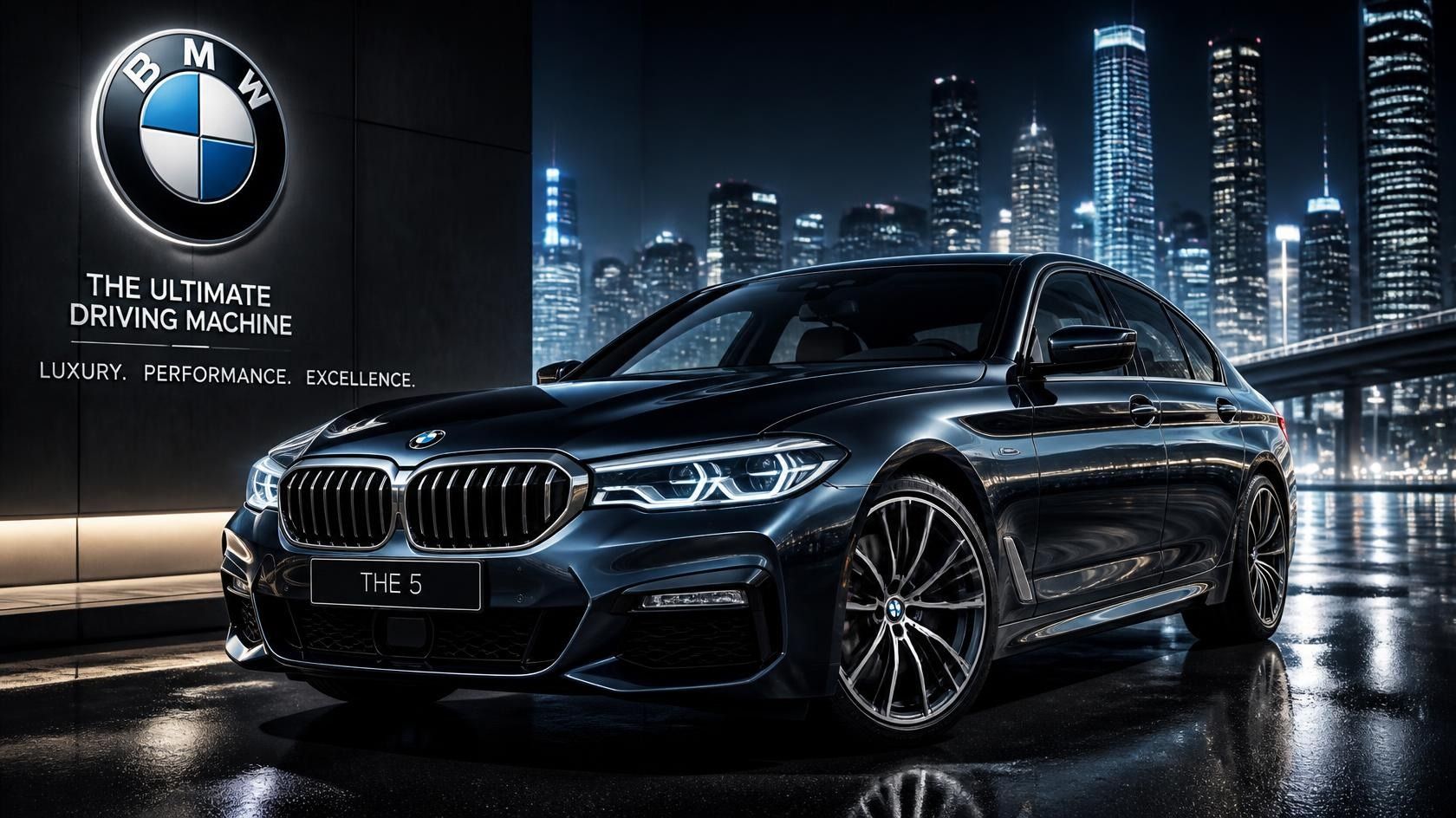

If you have ever searched for BMW meaning, you may already know that BMW is a famous car brand. However, its name has a specific historical meaning that goes beyond luxury vehicles, powerful engines, and stylish designs. BMW stands for Bayerische Motoren Werke, a German name that translates into English as Bavarian Motor Works.
The company is widely known for producing premium sedans, sporty coupes, SUVs, electric vehicles, and high-performance cars. Its models are popular among drivers who value engineering, comfort, and driving performance. Over time, BMW has also become a recognizable symbol in movies, music, online conversations, and social media.
In this guide, you will learn what BMW means in English, where the name originated, how the company developed, and why people associate it with success and personal identity. You will also discover real-life conversation examples, common misunderstandings, and the differences between major BMW vehicle types.
BMW – Quick Meaning
English Translation
BMW stands for Bayerische Motoren Werke. This is German, not English. The direct English translation is Bavarian Motor Works. “Bayerische” means Bavarian, “Motoren” means motors or engines, and “Werke” means works or factories.
The name connects the company to Bavaria, a region in southeastern Germany. BMW is headquartered in Munich, Bavaria, and its identity remains closely connected to German engineering and automotive manufacturing.
Simple Definition
In simple terms, BMW is a German automobile and motorcycle manufacturer known for premium vehicles and performance-focused engineering. The company produces several types of cars, including luxury sedans, sports-oriented models, SUVs, and electric vehicles.
When someone says “BMW,” they usually mean the company or one of its vehicles. The name itself is not a secret code, an English slang expression, or an abbreviation for luxury. It is the official short name formed from the company’s German title.
Quick Examples in Sentences
Here are a few natural examples of how people use BMW in everyday English:
- “My uncle just bought a BMW sedan.”
- “BMW is known for its performance-oriented cars.”
- “She posted a picture of her new BMW on Instagram.”
- “I prefer BMW because I enjoy sporty handling.”
- “The company introduced an electric BMW model.”
- “He hopes to own a BMW someday.”
These examples show that BMW is normally used as a brand name or a noun referring to a vehicle.
Origin & Background
Historical Roots
BMW’s history began in the early twentieth century, during a period when aircraft engines and other motor technologies were important industries in Germany. The company traces its official origins to 1916, although its corporate history involves earlier engineering businesses and organizational changes.
The name Bayerische Motoren Werke reflects the company’s Bavarian roots and its original connection to motor engineering. BMW initially became associated with aircraft engine production before expanding into motorcycles and automobiles.
BMW produced its first motorcycle, the R 32, in 1923. It entered automobile manufacturing in 1928 through its acquisition of an established car manufacturer. These developments helped turn BMW into a major name in transportation and automotive engineering.
Evolution Over Time
BMW gradually developed a reputation for combining technical engineering with distinctive vehicle design. Its cars became associated with responsive handling, driver-focused interiors, and a balance between comfort and performance.
After the Second World War, the company faced major challenges and had to rebuild its business. During the following decades, BMW expanded its passenger-car range and established a stronger position in the premium automotive market.
Today, BMW manufactures vehicles with gasoline, diesel, plug-in hybrid, and fully electric powertrains, depending on the model and market. Its product portfolio includes the 3 Series, 5 Series, 7 Series, X5, i4, and iX, among others. The company also operates BMW Motorrad, its motorcycle division.
Real-Life Conversations (Mandatory)
The meaning of BMW usually stays the same across conversations. However, the tone changes depending on whether people are discussing a purchase, sharing a photograph, or joking with friends.
WhatsApp Chat
Example 1: Discussing a new car
Ali: Guess what? My brother bought a BMW 3 Series.
Hamza: Seriously? Congratulations to him!
Ali: Yes, he wanted something comfortable but sporty.
Hamza: That sounds like a great choice.
Example 2: Asking about the brand
Sara: What does BMW actually stand for?
Mina: It’s short for Bayerische Motoren Werke.
Sara: What’s that in English?
Mina: Bavarian Motor Works. It’s a German company.
These examples show that BMW is commonly used as a straightforward brand name in private messaging.
Instagram DMs
Example 1: Reacting to a photograph
Alex: That BMW looks amazing!
Jordan: Thanks! I took the picture at a local car show.
Alex: Which model is it?
Jordan: It’s a BMW M4.
Example 2: Asking about a dream car
Chris: Is that your dream car?
Taylor: Definitely. I’ve always liked the BMW M Series.
Chris: The design is impressive.
On Instagram, BMW often appears in captions, comments, and direct messages about cars, lifestyle interests, travel, and automotive photography.
TikTok Comments
Example 1: Performance discussion
User 1: That BMW sounds incredible.
User 2: It’s an M model. The exhaust note is part of the appeal.
Example 2: Lighthearted humor
User 1: One day, I’ll drive a BMW like this.
User 2: First, let me finish paying for my current car!
TikTok users may also discuss BMW acceleration, modifications, racing games, maintenance costs, and comparisons with Mercedes-Benz or Audi.
These examples are illustrative rather than quotations from actual users. They demonstrate how the brand name works in everyday online communication.
Emotional & Psychological Meaning
1. Achievement
For some people, owning a BMW represents a personal milestone. They may associate it with career progress, financial independence, or the reward for years of hard work.
However, a vehicle does not automatically prove that someone is successful. People can purchase cars through savings, financing, leasing, or other arrangements. Therefore, BMW may symbolize achievement to an individual without providing reliable evidence of that person’s financial position.
2. Identity & Personality
Some BMW drivers identify with the brand’s sporty styling and performance-focused image. Others prefer its interior design, comfort, technology, or familiarity with the driving experience.
Brand preference can form part of a person’s lifestyle, just as people choose particular clothing labels, smartphones, or sports teams. Still, owning a BMW does not establish someone’s personality. A person may choose the vehicle for practical reasons rather than status or self-expression.
3. Driving Pleasure Philosophy
BMW has long promoted the connection between its vehicles and an engaging driving experience. Steering response, chassis tuning, engine performance, and driver-focused controls have helped shape this reputation.
The phrase “driving pleasure” captures an important part of BMW’s brand identity. Nevertheless, the experience differs between models. An electric BMW, a large luxury sedan, and a performance coupe offer different driving characteristics. Buyers should evaluate individual vehicles instead of assuming every BMW delivers the same experience.
Usage in Different Contexts
1. Social Media
On social media, BMW commonly appears in car photography, automotive reviews, dealership advertisements, and lifestyle posts. Users may include the name in hashtags such as #BMW, #BMWM, or #BMWLife.
The term usually refers to the manufacturer or a particular vehicle. In some posts, it may also support a personal story about reaching a goal or enjoying a hobby.
2. Friends & Relationships
Friends may discuss BMW models when comparing cars, sharing driving experiences, or talking about future purchases. One person might prefer BMW, while another favors Audi, Mercedes-Benz, Lexus, or another manufacturer.
The conversation can remain friendly as long as brand preferences are treated as personal opinions. Mocking someone for owning a different car can turn an ordinary discussion into an unnecessary argument.
3. Work & Professional Settings
In professional settings, BMW usually refers to the company, its vehicles, a dealership, or an automotive business relationship. A salesperson might discuss a BMW lease, while an engineer might explain a vehicle’s powertrain.
For formal communication, use precise model names and technical terms when possible. For example, “BMW iX electric SUV” provides more information than simply saying “BMW.”
4. Casual vs Serious Tone
In casual conversations, people may say, “I love BMWs,” or “That BMW looks fast.” These phrases are natural and easy to understand.
In serious contexts, such as vehicle purchases, insurance claims, repairs, or business discussions, details matter more. Include the model, model year, trim, and relevant specifications. BMW is the brand name, not a complete description of a vehicle.
Common Misunderstandings
Misunderstanding 1: BMW Is an English Acronym
BMW is an abbreviation formed from a German company name. It does not originally stand for an English phrase. The correct expansion is Bayerische Motoren Werke, translated as Bavarian Motor Works.
People sometimes invent humorous English expansions online. These are jokes, not the company’s official name.
Misunderstanding 2: It Only Means “Luxury”
BMW is widely considered a premium automotive brand, but the name does not literally mean luxury. Its products cover different price points, body styles, and performance categories.
The company’s identity includes engineering, vehicle design, technology, comfort, and driving dynamics. Luxury is one part of its reputation, not the literal meaning of its name.
Misunderstanding 3: All BMW Owners Are Wealthy
BMW ownership does not establish a person’s income or financial situation. Some buyers purchase new premium models, while others buy used vehicles or choose older models that fit their budgets.
Ownership costs can include fuel or electricity, insurance, maintenance, repairs, taxes, and financing. Anyone considering a BMW should assess total ownership costs rather than relying on the brand’s image.
When It Should NOT Be Used
BMW is a proper brand name, so it should not replace unrelated words or be treated as a universal slang term.
Avoid using the brand to make unsupported assumptions about someone’s income, personality, or social standing. In professional writing, use the full model name when the distinction matters. Also, do not confuse BMW with other automotive abbreviations, such as SUV, EV, or ABS.
Comparison Table
The following table explains BMW alongside several related automotive terms.
| Term | Meaning | Main Use |
| BMW | Bayerische Motoren Werke | German vehicle manufacturer |
| Mercedes-Benz | Automotive brand name | Premium cars and vans |
| Audi | Automotive brand name | Premium cars and SUVs |
| SUV | Sport utility vehicle | Vehicle body style |
| EV | Electric vehicle | Vehicle powered by electricity |
| BMW M | BMW performance division and model designation | High-performance vehicles |
| BMW i | BMW’s electric-focused model family | Electric mobility |
| BMW Motorrad | BMW motorcycle division | Motorcycles and related products |
| VIN | Vehicle identification number | Identifies an individual vehicle |
The key distinction is that BMW is a manufacturer, while SUV and EV describe vehicle categories or powertrain types. BMW M and BMW i refer to specific parts of the brand’s broader product identity.
Variations / Types (8–10 Minimum)
BMW offers several vehicle styles. Availability, equipment, and model names vary by market and model year.
1. BMW Sedan
A sedan generally has four doors and a separate trunk. BMW sedans, including the 3 Series and 5 Series, are popular with drivers seeking a balance of comfort, technology, and road performance.
2. BMW Coupe
A coupe traditionally has a sportier profile and often two doors, although automotive naming conventions can vary. Models such as the BMW M4 appeal to drivers who value performance and distinctive styling.
3. BMW Convertible
A convertible has a roof that can open or retract, allowing occupants to enjoy open-air driving. BMW convertible models combine this feature with premium interiors and performance-oriented options.
4. BMW M Series
BMW M vehicles emphasize performance, handling, braking, and powertrain engineering. Examples include the M2, M3, M4, and M5. Equipment and performance vary by model and generation.
5. BMW SUV (X Series)
BMW’s X Series includes SUVs and crossover vehicles designed for different passenger, cargo, and driving needs. Examples include the X1, X3, X5, and X7.
These vehicles offer varying combinations of space, comfort, all-wheel drive, and performance. Buyers should compare dimensions and equipment before choosing a model.
6. BMW Electric (i Series)
BMW’s electric lineup includes vehicles such as the i4 and iX. These models use electric motors and rechargeable battery packs rather than relying exclusively on an internal-combustion engine.
Driving range, charging speed, and battery capacity differ across vehicles. Local charging access and daily driving needs are important considerations when choosing an electric BMW.
7. BMW Hybrid
Plug-in hybrid BMW models combine an internal-combustion engine with an electric motor and rechargeable battery. Depending on the model, they can support electric driving for shorter trips and use the engine for longer journeys.
Actual fuel economy depends on charging habits, driving conditions, and vehicle configuration. Buyers should review the specifications for the exact model year.
8. BMW Touring (Wagon)
BMW Touring models are estate or wagon-style vehicles designed to provide additional cargo space while retaining passenger-car driving characteristics. They can suit families and drivers who need practical storage without choosing an SUV.
Availability differs by country. Some Touring models are more common in European markets than in the United States.
9. BMW Gran Coupe
The Gran Coupe name is used for certain BMW models that combine a sleek, coupe-inspired roofline with four doors. Examples include the 2 Series Gran Coupe and 4 Series Gran Coupe.
These vehicles offer a different styling approach from traditional sedans. Rear headroom and cargo access may vary with the design.
10. BMW Classic / Vintage
Classic BMW vehicles include historic models valued for their design, engineering, and place in automotive history. Examples include the BMW 2002 and early generations of the 3 Series.
Collectors often consider originality, service records, rust, parts availability, and restoration quality. A vintage BMW can be appealing, but maintenance needs may be greater than those of a newer vehicle.
How to Respond When Someone Uses It
Casual Replies
If someone mentions a BMW, you can keep the response simple:
- “Nice! Which model is it?”
- “I’ve always liked that design.”
- “Is it comfortable to drive?”
- “Do you prefer BMW or Mercedes-Benz?”
These replies show interest without making assumptions about cost or status.
Funny Replies
Lighthearted responses can work among friends who understand the joke:
- “That looks great. Now I need to check my budget!”
- “My dream car is ready. My savings account isn’t.”
- “First the BMW, then the parking space!”
Keep humor friendly. Avoid jokes that embarrass someone about their finances or personal circumstances.
Mature / Confident Replies
If someone asks about your preference, you might say:
- “I like BMW’s approach to driving dynamics.”
- “I’d compare the running costs before deciding.”
- “The right car depends on how someone plans to use it.”
These answers focus on individual needs rather than brand competition.
Private / Respectful Replies
If someone shares a car purchase or financial goal, respond respectfully. You could say, “Congratulations! I hope you enjoy it,” or “That’s exciting. What made you choose that model?”
If the person does not want to discuss the price, there is no need to ask. A car can be a personal purchase, and respectful conversation does not require private financial details.
Regional & Cultural Usage
Western Culture
In the United States and many European countries, BMW is widely recognized as a premium car brand. People may associate it with performance, business success, personal taste, or automotive enthusiasm.
However, opinions differ. Some drivers focus on handling and engineering, while others prioritize comfort, reliability, or running costs.
Asian Culture
Across Asian markets, BMW may be associated with premium design, technology, professional success, or social status. These associations depend on local income levels, taxes, import costs, and consumer preferences.
The meaning is not identical across every country. A vehicle’s price and cultural importance can vary substantially between markets.
Middle Eastern Culture
BMW is a recognizable automotive brand in many Middle Eastern markets. Buyers may value its styling, performance, comfort, and premium image.
Preferences differ between individuals and countries. Local climate, fuel costs, service access, road conditions, and vehicle availability can influence purchasing decisions.
Global Internet Usage
Online, BMW is commonly used in model discussions, reviews, memes, automotive photography, and comparisons with competing brands. The name is usually understood without explanation because of the manufacturer’s international presence.
Although users sometimes create humorous alternative meanings, these should not be confused with the official German expansion. Context helps distinguish a factual explanation from a joke.
FAQs
1. What does BMW mean in English?
BMW stands for Bayerische Motoren Werke, a German phrase that translates to Bavarian Motor Works. It is the name of a German automobile and motorcycle manufacturer headquartered in Munich.
2. Is BMW an English abbreviation?
No. BMW comes from the German name Bayerische Motoren Werke. English phrases invented for the letters BMW are unofficial jokes rather than the company’s real name.
3. Why is BMW so popular?
BMW has built a strong reputation for premium design, driving performance, engineering, and technology. Popularity also varies by model, market, price, and individual preference.
4. Does BMW have a literal English company name?
Its German name translates directly as Bavarian Motor Works. However, BMW is the company’s established international brand name and is not normally replaced by that English translation.
5. Is BMW considered a luxury car?
BMW is generally classified as a premium automotive brand. Its vehicles include luxury sedans, performance cars, SUVs, and electric models, with prices and features varying across the range.
6. What makes BMW different from other brands?
BMW emphasizes driving dynamics, engineering, design, and technology. However, differences depend on the specific vehicle, and competing brands such as Audi, Mercedes-Benz, and Lexus have their own strengths.
7. Do people use BMW as slang?
BMW is not generally a standard English slang term. People may use it humorously in memes or casual conversation, but its primary meaning remains the automotive brand.
Conclusion
Understanding BMW meaning is simple once you know its German origin. BMW stands for Bayerische Motoren Werke, which translates into English as Bavarian Motor Works. The name reflects the company’s Bavarian roots and its history in motor engineering.
Today, BMW is recognized around the world for premium sedans, coupes, SUVs, electric vehicles, and performance models. For some drivers, the brand represents engineering and driving pleasure. For others, it reflects personal taste, comfort, or a long-term goal.
Still, BMW does not automatically indicate wealth or personality, and its name does not literally mean luxury. Whether you encounter BMW in a conversation, an online post, or a vehicle advertisement, understanding its meaning helps you interpret the reference accurately and confidently.

