
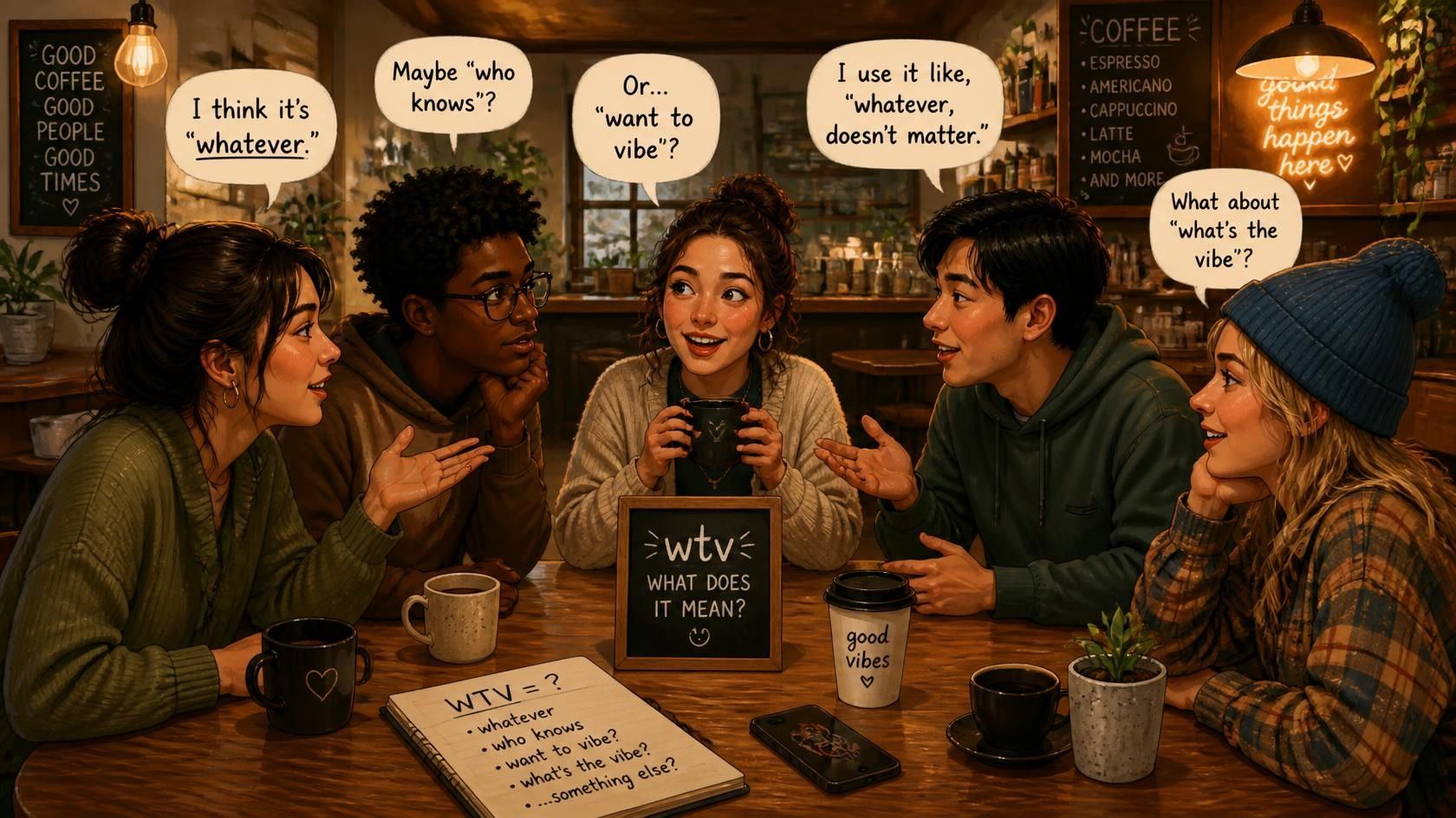

Understanding texting abbreviations can make online conversations easier. One common abbreviation is WTV, which appears in text messages, Snapchat chats, Instagram DMs, and other social media platforms. If someone sends you WTV, you might wonder whether they are being casual, expressing frustration, or ending a conversation.
WTV usually means “whatever.” People use it to show indifference, accept a decision, or suggest that something does not matter much to them. However, its exact meaning depends on the conversation, the relationship between the people, and the tone of the message.
This guide explains what WTV means in text, where it comes from, how people use it, and how to respond naturally. You will also learn how WTV compares with similar texting slang and when it is better to avoid using it.
What Does WTV Mean in Text? – Quick Meaning
The simplest definition
WTV stands for “whatever.” It is a shortened form commonly used in casual digital communication. People choose it because it saves time and makes messages shorter.
For example, if a friend asks, “What do you want to eat?” you might reply, “WTV, I’m hungry.” This means you are flexible about the choice.
However, WTV can sometimes sound dismissive. If someone says, “WTV, do what you want,” they may be annoyed or unwilling to continue discussing the issue.
The meaning often depends on context:
- Indifference: The choice does not matter.
- Agreement: You accept someone else’s decision.
- Frustration: You do not want to argue anymore.
- Casual flexibility: You are comfortable with different options.
Origin and Background of WTV
WTV developed as part of internet slang and the broader trend of shortening everyday expressions. Text messaging, online chat rooms, and social media encouraged people to communicate quickly using fewer characters.
As texting became more common, abbreviations such as LOL, BRB, IDC, and WTV became familiar to many internet users. WTV offers a quick alternative to typing the full word “whatever.”
Today, people may use it on WhatsApp, Snapchat, Instagram, TikTok, Discord, and other messaging platforms. It is particularly common in informal conversations among friends and people who regularly use internet slang.
WTV does not have one fixed emotional meaning. The abbreviation itself is neutral, but the surrounding words can make it sound friendly, careless, annoyed, or dismissive.
Real-Life Conversations: How WTV Is Actually Used
Real conversations help explain how WTV works. The following examples show how the same abbreviation can communicate different feelings.
WhatsApp Conversation: Casual and Easygoing
Person A: What should we order for dinner?
Person B: WTV you want. I’m good with anything.
Here, WTV communicates flexibility. The person does not have a strong preference and is happy to let the other person decide.
Instagram DM: Slightly Annoyed
Person A: Why are you upset with me?
Person B: WTV. Forget it.
In this example, WTV may suggest frustration or emotional distance. The person might feel tired of explaining the problem. However, it is best to ask politely rather than assume their feelings.
TikTok Comment: Playful or Casual
Person A: Which trend should we try next?
Person B: WTV gets more views lol.
This reply suggests that the person is flexible about the trend and cares more about the result. The addition of “lol” makes the message sound more relaxed.
The Emotional and Psychological Meaning Behind WTV
WTV can communicate more than the literal meaning of “whatever.” It may reveal how someone feels about a decision, disagreement, or conversation.
Sometimes, people use WTV to avoid unnecessary arguments. They may not want to spend more time discussing a minor issue. In other situations, the abbreviation can express disappointment when someone feels ignored or misunderstood.
Consider these common interpretations:
- Calm acceptance: “WTV you prefer” shows flexibility.
- Emotional distance: “WTV” may indicate that someone wants space.
- Frustration: “Fine, WTV” can suggest annoyance.
- Humor: “WTV bro 😂” may be a playful response.
- Disinterest: “WTV, I don’t care” communicates a lack of concern.
These interpretations are possibilities, not guarantees. A short message cannot reliably reveal someone’s complete emotional state. Consider the person’s usual communication style and the conversation before deciding what they mean.
How WTV Is Used in Different Contexts
Social Media
On social media, WTV appears in comments, captions, replies, and direct messages. Users often choose it when reacting quickly or expressing a casual opinion.
For example, someone might comment “WTV works” when discussing an outfit, video idea, or weekend plan. Its meaning is usually clear when the conversation is informal.
Friends and Relationships
Friends may use WTV to show that they are comfortable with different choices. Couples may also use it during disagreements, although the tone can sometimes create confusion.
For example, “WTV makes you happy” might express genuine support. In a tense conversation, however, the same phrase could sound sarcastic. When feelings matter, a clearer message is often better.
Work and Professional Settings
WTV is generally unsuitable for formal workplace communication. Managers, clients, coworkers, and customers may interpret it as careless or disrespectful.
Instead of writing “WTV,” use a complete and professional response:
- “Either option works for me.”
- “I am comfortable with your recommendation.”
- “Please choose the option that best meets our needs.”
- “I have no strong preference.”
Casual vs. Serious Tone
The tone of WTV changes according to the situation.
| Situation | Example | Likely meaning |
| Choosing food | “WTV you want” | Flexible |
| Ending an argument | “WTV, I’m done” | Frustrated |
| Chatting with friends | “WTV bro” | Casual |
| Discussing work | “WTV is fine” | Potentially unprofessional |
| Supporting a friend | “WTV makes you happy” | Accepting or supportive |
The safest approach is to read the complete message instead of judging the abbreviation alone.
Common Misunderstandings About WTV
One common misunderstanding is assuming that WTV always means someone is angry. In reality, it can simply mean that the person has no preference.
Another mistake is interpreting WTV as enthusiastic agreement. Although it can communicate acceptance, it does not necessarily mean the person strongly supports an idea.
People also confuse WTV with IDC, but the expressions have slightly different meanings. WTV often refers to accepting a choice or dismissing a discussion, while IDC directly means “I don’t care.”
When You Should Not Use WTV
Avoid using WTV when the situation requires empathy, clarity, or professionalism.
For example, if someone shares a personal problem, replying “WTV” may make them feel that you are ignoring their feelings. A thoughtful response would be more appropriate.
You should also avoid it in job applications, business emails, customer support messages, and serious relationship discussions. When a short abbreviation could cause confusion, use clear language instead.
WTV Compared With Similar Texting Terms
Several texting abbreviations look similar but communicate different ideas.
| Slang term | Full meaning | Common use |
| WTV | Whatever | Indifference or flexibility |
| IDC | I don’t care | Lack of concern |
| IDK | I don’t know | Uncertainty |
| NVM | Never mind | Withdrawing a request or comment |
| TBH | To be honest | Introducing an honest opinion |
| IMO | In my opinion | Sharing a personal view |
| IDGAF | I don’t give a f*** | Strong indifference, often rude |
Understanding these differences helps you choose the right expression. For example, use IDK when you lack information and WTV when you mean that a choice does not matter much.
Key Insight
WTV is usually more flexible than IDC because it can refer to a decision rather than a person’s general level of concern. However, both can sound dismissive in the wrong context.
Variations and Related Forms of WTV
People often combine WTV with other words to make their messages more specific. These variations are informal and may not have exactly the same tone for every reader.
1. WTV
This is the basic abbreviation for “whatever.”
Example: “WTV, it’s your decision.”
It may express acceptance, indifference, or frustration, depending on the discussion.
2. Wtv u want
This means “whatever you want.”
Example: “We can watch wtv u want.”
It often communicates flexibility, especially when making plans with friends.
3. Wtv works
This means that any suitable option is acceptable.
Example: “Wtv works for me.”
It is useful in casual conversations about schedules, food, or activities.
4. Wtv happens
This phrase suggests acceptance of an uncertain outcome.
Example: “Let’s try our best and see wtv happens.”
A clearer alternative is “Let’s see what happens.”
5. Wtv lol
Adding “lol” can make WTV sound playful or less serious.
Example: “Wtv lol, let’s just go.”
However, humor does not always remove a dismissive tone.
6. Wtv
Repeating the basic abbreviation can sometimes emphasize disinterest.
Example: “Okay, wtv.”
The period and surrounding conversation may make it sound abrupt.
7. Wtv bro
This is a casual expression used among friends.
Example: “Wtv bro, you choose.”
Depending on the relationship, it can sound friendly, teasing, or annoyed.
8. Wtv then
This often signals acceptance after a disagreement.
Example: “Wtv then, we’ll talk later.”
It may suggest that the speaker wants to end the discussion.
9. Do wtv
This means “do whatever” or “do whatever you want.”
Example: “Do wtv you think is best.”
It can communicate trust, but in an argument it may sound dismissive.
10. Wtv makes you happy
This phrase means that the other person’s happiness or preference is being accepted.
Example: “Choose the place that makes you happy.”
The full version sounds warmer and clearer than the abbreviation alone.
How to Respond When Someone Uses WTV
Your response should depend on the situation and your relationship with the sender. You do not need to turn every short message into a serious discussion.
Casual Replies
Use these when the conversation is friendly and relaxed:
- “Okay, sounds good!”
- “Cool, let’s do that.”
- “Your choice works for me too.”
- “No problem, either option is fine.”
Funny Replies
If you regularly joke with the person, a playful response may fit:
- “Wow, such a detailed answer!”
- “Okay, mystery person 😂”
- “I’ll take that as a yes.”
- “Decision-making champion right here!”
Only use humor when you know the other person will understand it.
Mature and Confident Replies
If WTV follows a disagreement, remain calm and avoid escalating the situation.
- “Okay, we can discuss it later.”
- “I understand. Let me know if you want to talk.”
- “That’s fine, but I would like to understand your point.”
- “Let’s agree to disagree.”
These responses communicate confidence without being aggressive.
Private or Respectful Replies
If the message seems emotionally distant, ask for clarification rather than making assumptions.
You could say, “Are you okay, or do you need some space?” Another option is, “I’m not sure how to interpret that. Can you explain what you mean?”
Respectful questions give the other person an opportunity to explain their feelings. They also reduce the chance of a misunderstanding.
Regional and Cultural Usage of WTV
WTV is used across online communities, but its tone may vary according to language habits, age groups, and communication styles.
Western Culture
In the United States, Canada, and other English-speaking communities, WTV is commonly understood as a casual form of “whatever.” Its meaning still depends on the conversation and the relationship between the speakers.
Asian Culture
In Asian online communities, English abbreviations often appear alongside local languages and transliterated expressions. WTV may be understood by users familiar with English-language internet slang, but familiarity varies by person and community.
Middle Eastern Culture
Users in Middle Eastern countries may mix English texting abbreviations with Arabic or other languages. WTV can appear in informal chats, especially among people who communicate regularly in English online.
Global Internet Usage
Social media helps slang spread across national borders. However, not everyone interprets abbreviations in the same way. If you are unsure whether someone understands WTV, spelling out “whatever” can make your meaning clearer.
Frequently Asked Questions
What does WTV mean in a text?
WTV means “whatever.” People use it to express indifference, accept a choice, or suggest that a decision does not matter much to them.
Is WTV rude?
WTV is not always rude. It can sound friendly and flexible, but it may seem dismissive when used during an argument or serious conversation.
What does WTV mean from a girl or guy?
The meaning is generally the same regardless of gender. The sender might be relaxed, annoyed, or uninterested, so consider the context rather than assuming their feelings.
What does WTV mean on Snapchat or Instagram?
On Snapchat and Instagram, WTV usually means “whatever.” It is commonly used in direct messages, comments, and casual conversations.
Is WTV the same as IDC?
No. WTV means “whatever,” while IDC means “I don’t care.” Both can show indifference, but they are not interchangeable in every situation.
How should I reply to WTV?
You can reply with “Okay, sounds good” if the conversation is casual. If the message seems annoyed, ask politely whether something is wrong instead of assuming.
Should I use WTV at work?
It is better to avoid WTV in professional communication. Use clear alternatives such as “Either option works for me” or “I am comfortable with your recommendation.”
Conclusion
WTV is a popular texting abbreviation that stands for “whatever.” It can communicate flexibility, indifference, acceptance, humor, or frustration, depending on how and where it is used. Understanding the surrounding conversation is the best way to interpret its meaning accurately.
Although WTV works well in casual messages, it is not always appropriate for serious discussions or professional settings. When clarity matters, choose a complete and respectful sentence. By understanding WTV and its related slang terms, you can communicate more naturally, avoid misunderstandings, and respond confidently in everyday digital conversations.

